CommunityCivil RightsPolitics & Policy
Florida Shuts Down CAIR Over "Terrorist" Designation: What It Means for American Muslims Civil Rights
Florida's "domestic terrorist organization" designation forced the Council on American-Islamic Relations (CAIR) and its Florida chapter to halt operations on November 5. The groups are now asking a federal appeals court for relief in a case that tests how far a state can go in labeling a Muslim civil rights organization.

The nation's largest Muslim civil rights organization has stopped working in Florida. CAIR-Florida's offices in Tampa closed on November 5, and its operations and funding are suspended while it challenges the state's "domestic terrorist organization" label in federal court.
How Florida's CAIR Terrorist Designation Came About
The fight began in December 2025, when Gov. Ron DeSantis issued an executive order calling CAIR a "terrorist organization." The order directed state agencies to cut the group, and anyone who knowingly supports it, off from government contracts, jobs and funding. A federal judge blocked that order, citing First Amendment concerns, and the state appealed.
In April 2026, DeSantis signed HB 1471 and HB 1473 into law. HB 1471 created a state system for designating "domestic terrorist organizations." On September 29, DeSantis and other Cabinet officials voted to designate CAIR and CAIR-Florida, and the groups say they were not given a chance to be heard first. Florida also applied the label to the Muslim Brotherhood and "antifa." The designation took effect on November 5.
What the Court Ruled
On the night of November 4, a federal court refused to reverse the designation. The ruling does not resolve the case or make factual findings about the state's allegations, which the groups call baseless. That means the case is still being decided on its merits.
What Florida and CAIR's Critics Say
State officials argue the designation targets terrorism, not speech, and say CAIR has acted as a front for Hamas and the Muslim Brotherhood. In the earlier executive order case, the state told the appeals court that the order simply designates terrorist organizations to keep state resources from them. Critics of CAIR often point to a 1991 Muslim Brotherhood document. CAIR denies the claims, says the memo never mentions it, and notes it wasn't founded until 1994. It has never been charged with or convicted of a crime.
What CAIR and Civil Liberties Groups Say
CAIR argues the designation violates its First Amendment and due process rights. Free speech groups including the Knight First Amendment Institute and FIRE argue the law lets officials label nonprofits as terrorists based on unproven allegations.
What the Shutdown Means for Florida's Muslim Community
The impact reaches beyond advocacy. CAIR-Florida, which had about a dozen staff members and eight contractors, provided pro bono legal services to residents facing discrimination at work or from the government, as well as people navigating the immigration system. Those services are now unavailable in the state, and local attorneys who are stepping in say they cannot replace a full legal team.
The effects are also being felt in daily community life. Even before the designation took effect, CAIR-Florida had paused donor outreach and turned away new clients. Mosque leaders in central Florida are reportedly becoming cautious about programs beyond prayer that could be seen as political, and a student group at the University of Florida canceled an event on Islamophobia after learning CAIR would be represented.
How Texas Is Responding Differently
Florida's move followed Texas Gov. Greg Abbott's proclamation designating CAIR a foreign terrorist organization, but Texas is now changing course. Abbott lost his reelection bid, and Gov.-elect Gina Hinojosa has pledged to reverse the designation. On November 16, Attorney General Ken Paxton, who lost his U.S. Senate race, dropped his lawsuit seeking to ban CAIR from operating in Texas. CAIR's separate federal lawsuit against Abbott's proclamation is still active. Florida's legislature and governor's office remain under Republican control.
What Happens Next in the CAIR v. DeSantis Case
CAIR filed a notice of appeal on November 5 and an emergency motion for an injunction pending appeal on November 7. Briefing at the Eleventh Circuit is ongoing. Until a court says otherwise, the designation stays in force, and CAIR-Florida remains closed.
Sources: ACLU, Knight First Amendment Institute, WUSF, The Guardian, Texas Tribune, Daily Signal.
More on Community
See all →
Why Muslims Will Become the World’s Largest Religious Group by 2035

Helping Hand for Relief and Development Delivers Emergency Assistance to Afghans Displaced from Iran
Muslim Women Make History in the 2026 Midterms With Record Wins

IslamiCity and HADI Relief: How a Pioneering Muslim Web Portal Connects Faith, Zakat and Global Humanitarian Aid
Related
Meet the Muslim Members of Congress in 2026: Who Won and What They Stand For
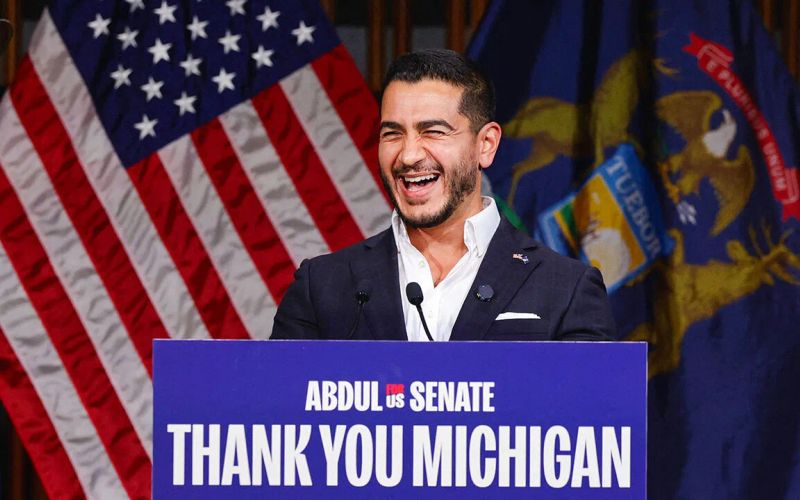
At least seven Muslim lawmakers won seats in Congress in the 2026 midterms, including Abdul El-Sayed, the first Muslim elected to the U.S. Senate. Here are the Muslim members of Congress for 2026, with who they are and what they’ve said they’ll focus on.
Muslim Americans Build Political Power as First Muslim Senator-Elect Joins Record Wave of Muslim Officials
Days after Abdul El-Sayed’s historic Senate win, Muslim American leaders are celebrating a record number of election victories across the country. Muslim voters and candidates are turning growing civic engagement into elected office.