Education & YouthFaith & Culture
Muslim Student Scholarship and Mentorship Programs Expand as STEM Interest Grows

From the Islamic Scholarship Fund to targeted STEM awards for women, funding pipelines are diversifying
Scholarship and mentorship programs aimed at Muslim American students are expanding in both scope and specialization, with dedicated funding now reaching fields from filmmaking and public policy to engineering and medicine.
One of the most established players, the Islamic Scholarship Fund (ISF), was founded in 2009 with a mission to increase American Muslim representation in government and media. The fund has since awarded more than $3.5 million in scholarships and grants to over 570 students, and now counts more than 900 alumni across its focus areas of public policy, law, media, and film [1]. ISF pairs its funding with mentorship, career counseling, and professional experience support the organization says is meant to build long-term representation, not just cover tuition [1].
From One Fund to a Full Ecosystem
STEM-specific funding has grown alongside these efforts. The Dr. Adawia Alousi STEM Scholarship Fund, administered through the Center for Arab American Philanthropy, targets Muslim women pursuing STEM degrees, offering awards between $2,500 and $10,000 to students who demonstrate financial need and meet GPA benchmarks [2, 3]. The fund also runs a dedicated STEM mentorship track for past scholars, extending support beyond the initial award [2].
Organizations aggregating scholarship listings for Muslim students, such as Bold.org and Scholarships360, now catalog well over a dozen active awards spanning STEM, media, law, and healthcare a sign of how much the funding landscape has diversified beyond a handful of general-purpose awards [3, 4].
Campus-level infrastructure has grown in parallel. MSA National, the umbrella organization for Muslim Student Associations, was founded in 1963 at the University of Illinois Urbana-Champaign and continues to support chapter development, leadership training, and student advocacy across U.S. campuses [5], providing the on-the-ground network that connects students to these funding opportunities and to each other.
Scholarship administrators note that demand continues to outpace available funding. Application guidance from several of these programs emphasizes that essays engaging with how Islamic values or community involvement shape a student’s goals tend to stand out, reflecting selection committees’ interest in applicants embedded in Muslim community life, not just strong transcripts [4].
Sources
- Islamic Scholarship Fund coverage, “Islamic Scholarship Fund: Empowering Muslim students,” VOICE — https://theievoice.com/islamic-scholarship-fund-grants-2026/
- Center for Arab American Philanthropy, “Dr. Adawia Alousi STEM Scholarship for Muslim Women” — https://www.centeraap.org/grants/scholarships/dr-adawia-alousi-scholarship-fund-application/
- Bold.org, “Top 10 Muslim Scholarships to Apply for in August 2026” — https://bold.org/scholarships/by-type/muslim-scholarships/
- Scholarships360, “Top 4 Scholarships for Muslim Students in August 2026” — https://scholarships360.org/scholarships/scholarships-for-muslim-students/
- AffordableCollegesOnline.org, “Muslim Scholarship Opportunities” — https://www.affordablecollegesonline.org/college-resource-center/muslim-student-scholarships/
More on Education & Youth
See all →
Related
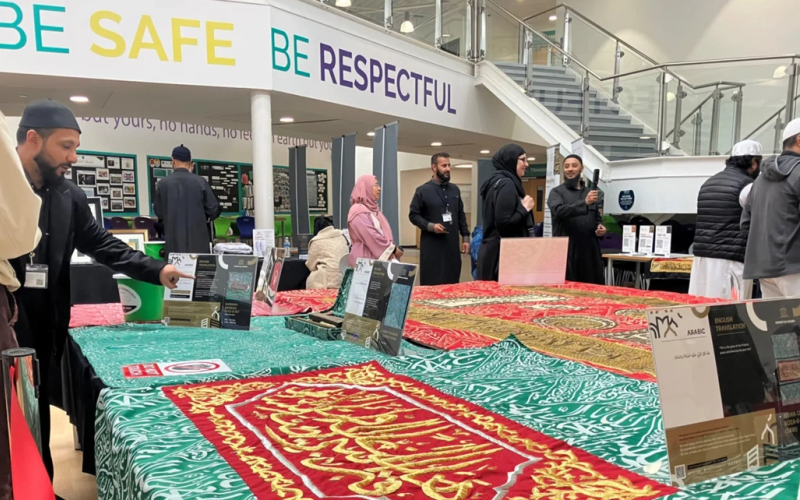
Islamic Artefacts Go on Display at North Lincolnshire School
Sacred Islamic artefacts dating back more than 700 years went on display at St Lawrence Academy in Scunthorpe, North Lincolnshire, offering visitors a rare opportunity to witness historic items from some of the holiest sites in Islam. The Kiswat al-Kaaba Exhibition, organised by the Kiswa Arts and Culture Gallery, was held on Thursday and featured…
IslamiCity Introduces Ramadan with Omar & Layla: A Special Children’s Series
Ramadan is a time of reflection, devotion, and self-improvement, and IslamiCity is making it even more engaging for children with their special series: Ramadan with Omar & Layla. This delightful program introduces young viewers to the beauty of Ramadan in a fun and educational way. IslamiCity offers a wide range of resources on its website,…
MAS 2023 Revive Packs – Insightful Islamic Resources for Youth and Community
The Muslim American Society (MAS) is committed to providing valuable resources and educational materials to empower youth and strengthen communities. In 2023, MAS released a series of informative and thought-provoking Revive Packs on various topics designed to help youth and the overall community deepen their understanding and connection to different aspects of life with the…