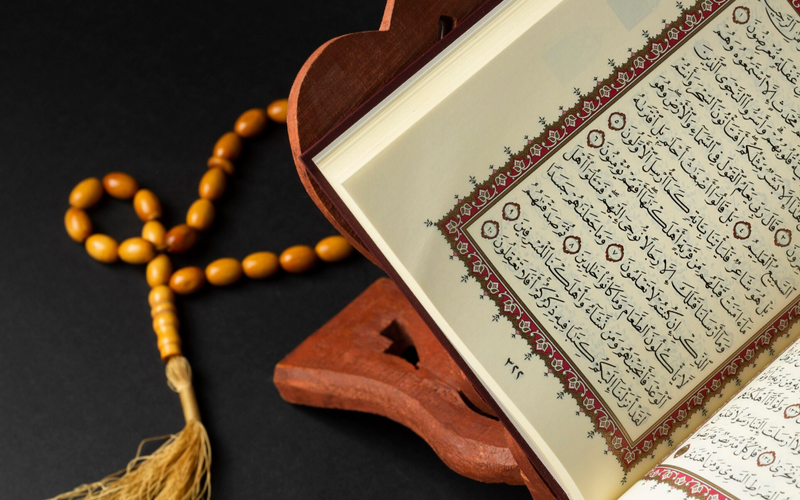
IslamiCity Explores the Quranic Emphasis on Moral Character

In a recent publication, IslamiCity highlighted a powerful Quranic theme: the centrality of moral character in leadership and social transformation. Marking the enduring relevance of prophetic teachings, the platform revisited verses that describe Prophet Muhammad (PBUH) as embodying “Khuluqin ‘Azeem”, a sublime standard of character (68:4).
The Quran attributes the Prophet’s success not to mysticism or symbolic authority, but to his elevated moral conduct. The message is clear: even the most truthful principles and the strongest systems cannot produce lasting results if those carrying them lack integrity.
Character, Not Mysticism
IslamiCity’s reflection also challenges modern assumptions about “spirituality.” The term itself, as commonly understood today, does not appear in the Quran. Instead, the scripture emphasizes purification of character and ethical responsibility.
By highlighting this distinction, IslamiCity underscores a broader point: true spiritual excellence in Islam is not about retreating from the world, but about engaging it with knowledge, justice, and moral strength. The Prophet (PBUH) is presented not as a detached mystic, but as a leader whose character translated revelation into action.

Revelation and Responsibility
The article further notes that revelation in Islam is portrayed as objective guidance so binding that even its recipient was commanded to believe in it and act upon it. Faith (Iman), in Quranic terms, is not passive belief but belief demonstrated through conduct.
Quoting verse 2:129, IslamiCity emphasizes that the Prophet’s role extended beyond conveying scripture. He was entrusted with teaching wisdom and purifying the character of his community, shaping individuals capable of embedding divine principles into society.
Let the Results Speak
Another key theme highlighted by IslamiCity is what could be described as a “pragmatic test” of truth. Referencing Quran 6:135, the text presents a challenge: allow each side to pursue its path, and let the outcomes determine what is true.
This framing positions Islam not merely as a set of abstract doctrines, but as a lived system intended for the benefit of humanity (57:25). Resistance to it, the piece argues, often stems from pride rather than reasoned critique, a warning echoed in verses such as 2:206 and 32:15–16.
A Model of Leadership Rooted in Character
Through its publication, IslamiCity brings forward a model of leadership grounded in:
- Moral excellence
- Accountability through action
- Humility over arrogance
- Commitment to justice
Rather than elevating vague notions of spirituality, the Quranic vision as presented by IslamiCity places character at the heart of faith and social reform.
In amplifying this message, IslamiCity invites readers to reconsider what true spiritual and moral leadership looks like in both personal and public life.
Find the link to the full article published by IslamiCity below.
More on Faith & Culture
See all →


Related
IslamiCity Takes a Closer Look at Ocean Conservation
IslamiCity examines the growing global focus on ocean conservation, highlighting recent research and reporting on the importance of marine ecosystems, particularly the world’s increasingly threatened kelp forests. Oceans cover about 71% of the Earth’s surface and contain roughly 97% of the planet’s water. They regulate the global climate, support immense biodiversity, and produce more than…

Meeting a Growing Need: IslamiCity’s Free Quran Service Expands Global Access to Islamic Knowledge
As misinformation and anti-Muslim sentiment continue to affect communities around the world, access to authentic Islamic knowledge has become increasingly important. Recognizing this need, IslamiCity launched its Free Quran Service in 2001 to help make translations of the Quran available to people seeking reliable information about Islam. Originally introduced during a period marked by acts…