IslamiCity Shares Commentary: Enforced Disappearance Is a Feminist Cause
IslamiCity shares Professor Mahmudul Hasan’s commentary on why enforced disappearance is a women’s rights issue, from Bangladesh and Kashmir to Argentina.

IslamiCity, the long-running Muslim digital platform, has published a commentary on its Life & Society section that argues enforced disappearance should be understood as a women’s rights issue, not only a crime against the men who are taken. The piece, “A Feminist Interpretation of Enforced Disappearance,” is written by Dr. Md Mahmudul Hasan, a professor in the Department of English Language and Literature at International Islamic University Malaysia.
A crime that reaches beyond its direct victims
Hasan notes that enforced disappearance is centuries old but returned as a systematic state practice in the second half of the 20th century. He points to Bangladesh under the Sheikh Hasina government (2009-2024), where he says disappearances and extrajudicial killings were used to silence opposition.
Most of those taken are men, he writes, but women are not spared. He cites Argentina’s “Dirty War” (1976-1983), when pregnant women were disappeared and their newborns were given to families linked to the military regime. Women who are not abducted themselves often carry the heaviest burden, he argues. They search for relatives, lose a breadwinner, and face stigma and sexual violence while seeking answers from officials. Hasan draws on academic research on Peru and Kashmir, and recounts a reported case in Bangladesh involving a police officer and the wife of a detained man. IslamiCity’s readers can find the full account on the original article page.
“Half-widows” and the limbo of not knowing
The article gives particular attention to Kashmir’s “half-widows,” women whose husbands disappeared and whose marital status is therefore unresolved. Citing a 2024 study, Hasan reports that between 8,000 and 10,000 men were disappeared in Kashmir from 1989 to 2006. He also cites scholar Ather Zia’s finding that, although local Islamic jurists have said such wives may remarry after four years, about 91 percent choose to keep waiting. According to the article, none of the disappeared Kashmiri men has returned.
Mothers as movement leaders
Hasan traces a global pattern of women organizing in response. In Bangladesh, Mayer Daak (“Mothers’ Call”) was formed after the 2013 disappearance of BNP leader Sajedul Islam Shumon, founded by his sisters Sanjida Islam Tulee and Afroza Islam Ankhi. The Association of Parents of Disappeared Persons in Kashmir was founded in 1994 by Parveena Ahangar, whose teenage son was taken in 1990. Hasan also lists CoMadres in El Salvador and Argentina’s Madres de la Plaza de Mayo, led by Hebe de Bonafini, who died in November 2022.
His conclusion is a call to action. Women’s rights groups in Bangladesh and abroad, he says, have yet to mount a unified campaign against enforced disappearance. If they did, regardless of who the perpetrators are, he argues the fight against the practice would be stronger.
Why it matters
By carrying this analysis, IslamiCity brings a human rights topic that often receives little coverage to a wide Muslim and global readership. The article sits within the platform’s Human Rights and Peace & Justice coverage and links to related reporting on Bangladesh’s July 2024 uprising.
Read the full article here.
More on Civil Rights
See all →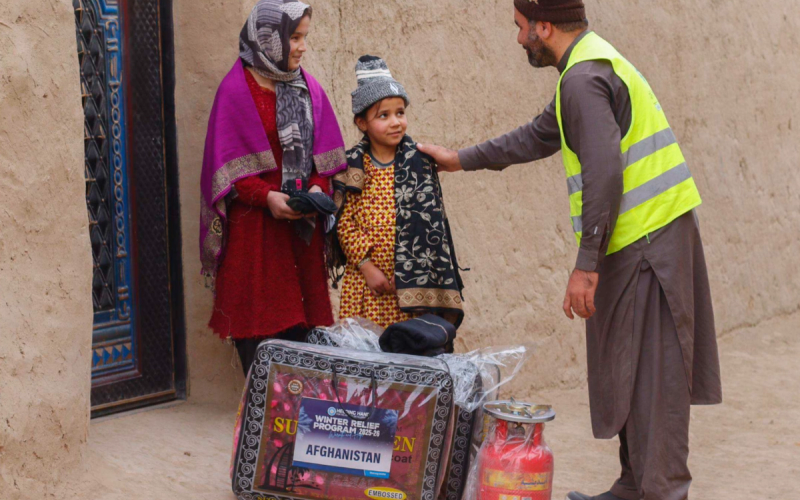
HHRD Debunks Common Winter Relief Program Misconceptions as Winter Preparations Begin
“As Much of a New Yorker as Anybody”: How Muslim New York Rose From Surveillance to City Hall
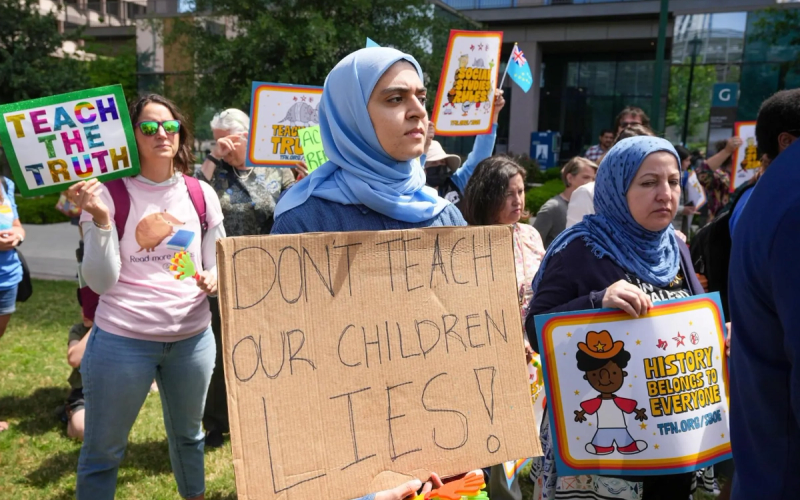
Texas Schools Approve Curriculum Muslim Students Call an Attack on Their Faith
Utah Mall Stabbing: Alarm of Community Safety and Vigilance
Related
IslamiCity Spotlights Community Feeding Program in New York
One in five New Yorkers, about 1.6 million people, lack sustainable access to food, and community feeding programs are stepping in to close the gap. Citing IslamiCity, this article looks at how neighborhood efforts like Mercy Truck deliver trusted, halal meals across all five boroughs.

IslamiCity Light Upon Light Podcast: Discussing the Sydney Tragedy, Healing, and Standing Together
In the aftermath of the recent tragedy in Sydney, communities worldwide have been grappling with grief, fear, and uncertainty. IslamiCity’s podcast Light Upon Light stepped into this conversation with Episode 37, focusing on healing, standing together, and fostering understanding in difficult times. The episode emphasizes how communities both local and global can respond to tragedy…